This year also marked a significant milestone, with the ECoC programme celebrating its 40th anniversary. Launched in 1985 through the joint initiative of Melina Mercouri and Jack Lang, the European Capital of Culture title has become one of Europe’s most emblematic cultural initiatives, celebrating the richness of European cultures while promoting international cooperation.
For the fourth consecutive year, the official Handover Ceremony, first initiated by ECoC Esch 2022, brought outgoing and incoming Capitals of Culture together in a symbolic celebration of European unity. Central to the ceremony was a sculpture by Luxembourgish glass artist Pascale Seil (“Made by Seil”). Its structure represents power and infinity, the glass conveys transparency and lightness, and the colours express diversity and cohesion, making it a striking symbol of unity for Europe.
A HISTORIC BORDERLESS HANDOVER
This year’s handover ceremony was historic: for the first time, the transition of the ECoC title took place in a cross-border European Capital of Culture, in Nova Gorica (Slovenia) and simultaneously in Gorizia (Italy).
Together with the co-capital Chemnitz 2025 in Germany and the two incoming titleholders Oulu 2026 and Trenčín 2026, the ceremony brought together five countries and a powerful symbol of a Europe united through culture, collaboration, and shared values. The central event unfolded at Trg Evrope / Piazza Transalpina, where a large crowd gathered for the official handover. The ceremony was attended by Stanislav Krajči, CEO of Trenčín 2026; Patrik Žák, Deputy Mayor of Trenčín; Asta Vrečko, Minister of Culture of the Republic of Slovenia; Gianmarco Mazzi, Secretary of State of the Italian Ministry of Culture; and mayors and high-ranking representatives from all other ECoC cities.
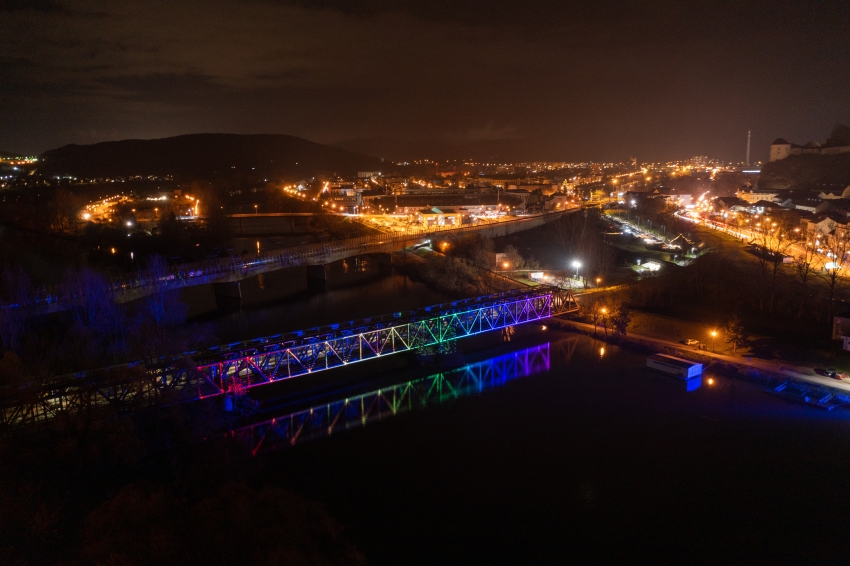
A luminous parade of lights and music enlivened the celebration, starting from both sides of the border and converging at the symbolic heart of the event, exactly on the line that at once unites and separates the two host cities.
Children’s voices filled the square as they sang a farewell to the outgoing Capitals of Culture. The evening reached its emotional pinnacle with a performance of Insieme / Together, the signature theme that had inaugurated GO! 2025 and returned to conclude the festivities. The musical programme also featured Slovak DJ and producer Jureš Líška, founder of the acclaimed project Fallgrapp, representing Trenčín 2026.
Fallgrapp is celebrated for its unique fusion of electronic music, live instrumentation, and captivating female vocals, creating layered arrangements and a distinctive visual aesthetic that makes the group one of Slovakia’s most recognisable acts. The evening continued with a special appearance by DJ Fritz Kalkbrenner, who opened the ECoC year in Chemnitz in January and now brought it to a symbolic close in Nova Gorica–Gorizia. His performance carried the celebrations late into the night, marking both an ending and a new beginning.
SYMBOL FOR EUROPE
The handover ceremony once again highlighted the unique spirit of the European Capital of Culture initiative: the celebration of diversity, creativity and cultural exchange. Through hundreds of artistic collaborations, community projects, partnerships and shared narratives, the ECoC title brings new energy to cities and regions and strengthens ties across Europe. Gathering Slovenia, Italy, Germany, Finland and Slovakia, the 2025-2026 handover served as a vivid reminder that culture remains one of Europe’s most powerful tools for cooperation, dialogue and peace.
As Oulu 2026 and Trenčín 2026 begin their title year, they carry forward the shared values and aspirations that lie at the heart of the ECoC mission: to connect people, foster understanding and build a common European future.
TRENČÍN 2026 OPENING CEREMONY
Looking ahead, Trenčín 2026 will launch its year as European Capital of Culture with a three-day celebration from 13 to 15 February 2026. The renovated historic city centre will become an open cultural stage, welcoming institutions, local communities, artists, and guests from Slovakia and beyond.
The opening programme will feature a symbolic “awakening of curiosity” for pupils and students, alongside community-led events supported by hundreds of volunteers. Streets and squares will come alive with festive parades, public breakfasts, gala performances, and family-friendly theatre, music, literary events, discussions, and poetry, providing a vibrant preview of the year-long programme to come.
Patrik Žák, Vice Mayor of Trenčín: “Receiving the ECoC title was a historic moment for Trenčín. It is not only a prestigious recognition but above all a great opportunity for transformation – for our city, our region, and our people. Culture has the power to bring energy, visibility, and long-term value. We are determined to make the most of it.”
Stanislav Krajči, CEO of Trenčín 2026: “The ECoC title is a catalyst for change. We aim to prove that even a smaller city can have bold cultural ambitions that go beyond the borders of Slovakia and the year 2026. We are already working with artists and partners from across Europe while engaging local citizens and building strong communities so that many of the activities continue even after the project ends. A key part of our vision is also the democratisation of public space – through placemaking, we are transforming streets and squares into spaces for everyday life.”