


Online newspaper based in Matera
EcocNews is registered at the Court of Matera in the press register n. 2/2021
Editor in chief: Mariateresa Cascino. Founder and editorial director: Serafino Paternoster
via San Francesco, 1 - 75100 Matera (Italy)



In 2025, Slovenia was one of two European countries to host a European Capital of Culture, alongside Germany’s Chemnitz. Nova Gorica was awarded the title, which it shared with the Italian city of Gorizia: a symbolic and powerful choice, as the entire cultural programme was built around the idea of overcoming the border that had divided the two cities for decades. An urban, physical and mental border, transformed into fertile ground for projects capable of fostering dialogue between artists, communities and creatives from both countries.
Nova Gorica and Gorizia are still all dressed up, as elegant as ever, but in a shade somewhere between green and turquoise that is still clearly visible on the branded buses, in shop windows and on information pillars.
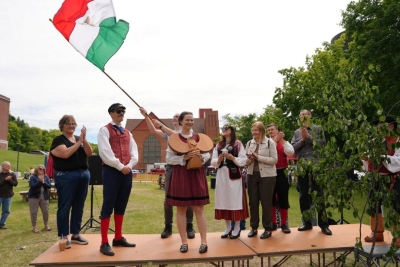
In the heart of Michigan’s Copper Country, the word “Finno‑Ugric” has suddenly taken center stage. It is a term that brings together distant peoples — Finns, Karelians, Sámi, Estonians, Hungarians, Khanty, Mansi and many others — united by languages and traditions that stretch across Northern Europe and Siberia. According to Dr. Natalia Abrosimova of Tallinn University, around 25 million people speak a Finno‑Ugric language: a vast, resilient and surprisingly cohesive cultural constellation.
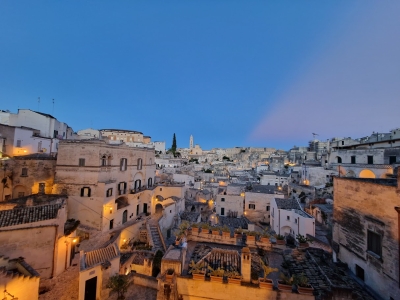
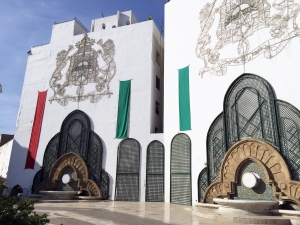
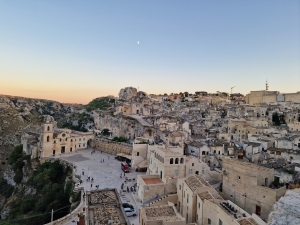
Following the successful launch of the Mediterranean Capitals of Culture and Dialogue initiative in Alexandria and Tirana in 2025, Matera (Italy) and Tétouan (Morocco) have been designated as the Mediterranean Capitals of Culture and Dialogue for 2026.
Deputy Mayor Vimini and Councillor Ottaviani were provided by the representatives with the timeframe within which to take the next steps, which will be: to consolidate the joint initiative between Pesaro and Urbino, to strengthen the province’s involvement, to expand the network within the Marche region and across regions, and to prepare in advance for the 2027 event
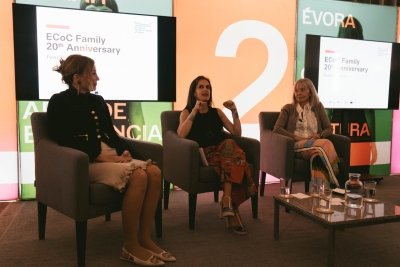
EcocNews is delighted to feature an article today by Beatriz Garcia, one of the leading experts on European Capitals of Culture. It has been 40 years since this European programme began. In this article, Beatriz Garcia helps us to better understand what has happened over the years, particularly in terms of the connections and challenges centred on culture and cities. Starting with the Ecoc family and Culture Next of which EcocNews is an official media partner.
EcocNews is pleased to feature Sylvia Ammann’s article on a specific study of the legacy left by a European Capital of Culture.
Arcadia has appointed Muriël Besemer as the Artistic Director of Arcadia 2028. Besemer is a theatre maker, educator and cultural programmer who has worked with young people for more than thirty years. In the coming years, she will work alongside the Arcadia team to develop the programme for Arcadia 2028, in which young people will play a central role.
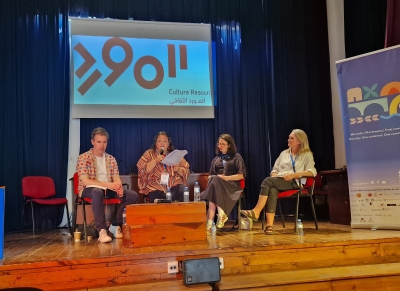
At the Culture Next conference held in Larnaca, Alma Salem’s presentation attracted considerable interest, owing to the depth of her thinking, the breadth of her narrative, and the relevance of her observations on the Mediterranean and the role of culture in resolving the conflicts currently ravaging the Middle East and the Mediterranean.
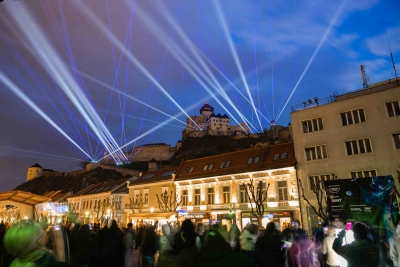
To mark the opening day of the European Capital of Culture Trenčín 2026, an evening event open to all will take place on 20 June, starting at 6 pm, celebrating friendship, culture and the ties between the two European Capitals of Culture: Trenčín and Nova Gorica / Gorizia.
The Mediterranean Capitals of Culture and Dialogue is born from the collective efforts of over 200 young representatives from the civil society of over 20 countries, who gathered at the Forum des Mondes Méditerranéens in February 2022 in Marseille. Their recommendations, alongside the call of Ministers of Culture of the Euro-Mediterranean region in June of the same year in Naples, inspired the 43 Member States of the Euro-Mediterranean Partnership to endorse it to further promote the diversity and shared identity of the Mediterranean and contribute to a better mutual understanding of its peoples.
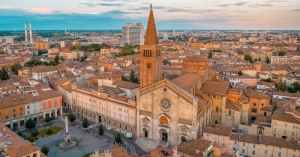
The picture is becoming increasingly clear regarding the Italian cities that have decided to vie for the title of European Capital of Culture for 2033. The race hasn’t officially begun yet, as the Ministry of Culture’s call for applications is expected to be released between the end of this year and the middle of next year. But the engines are already running. At the moment, only six cities—or rather, regions—are getting organized. They are Turin, Viterbo and Tuscia, Syracuse, Trieste, Norcia, and Piacenza.
Mediterranean Capitals of Culture and Dialogue 2026: 183 applications from 28 Euro-Mediterranean countries received in response to the Anna Lindh Foundation’s call for proposals for Matera and Tétouan.
Around 40 participants and stakeholders from current, former and future European Capital of Culture (ECoC) cities gathered in Leeuwarden from 13 to 15 April 2026 for the ECoC Echo Knowledge Transfer Seminar. Through a combination of expert presentations, discussions and site visits across Friesland, participants deepened their understanding of how cultural legacy can be built and sustained beyond the title year.
Évora_27 with 34 projects selected through the international open call “O Nosso Laboratório / Our Lab” of €2M. Selected applications bring together projects by artists and associations from 19 countries
The M.A.R.K.A.T.O. project . – Maintaining And Revitalizing Knowledge And Traditional Occupations - was presented some days ago, at HubOut in Matera. It is a cross-border cooperation initiative funded by the Interreg VI-A Greece–Italy Programme 2021–2027 and co-funded by the European Regional Development Fund (ERDF), under Specific Objective RSO4.6 dedicated to culture and sustainable tourism.
An institutional delegation comprising representatives of the 2025 European Capitals of Culture – including the Mayor of Gorizia, Rodolfo Ziberna; the Mayor of Nova Gorica, Samo Turel; the director of ECoC projects in Chemnitz, Josephine Hage – took part in a day of meetings and institutional activities in Skopje in recent days, with the aim of sharing the results achieved and making expertise and experience available to support Skopje’s bid for the title of European Capital of Culture 2028.
At its extraordinary meeting on 25 March, the Supervisory Board of Kulturhauptstadt Europas Chemnitz 2025 gGmbH unanimously appointed Josephine Hage as the new Managing Director with effect from 1 October 2026.
Online newspaper based in Matera
EcocNews is registered at the Court of Matera in the press register n. 2/2021
Editor in chief: Mariateresa Cascino. Founder and editorial director: Serafino Paternoster
via San Francesco, 1 - 75100 Matera (Italy)